

News and Views
Defence Coins, Australian Air Force Coins, Australian Army Coins, Australian Navy Coins, Corporate Coins, Educational Coins, Fire & EMS Coins, Non-profit Coins, Police Coins
Challenge Coins — The Manufacturing Process

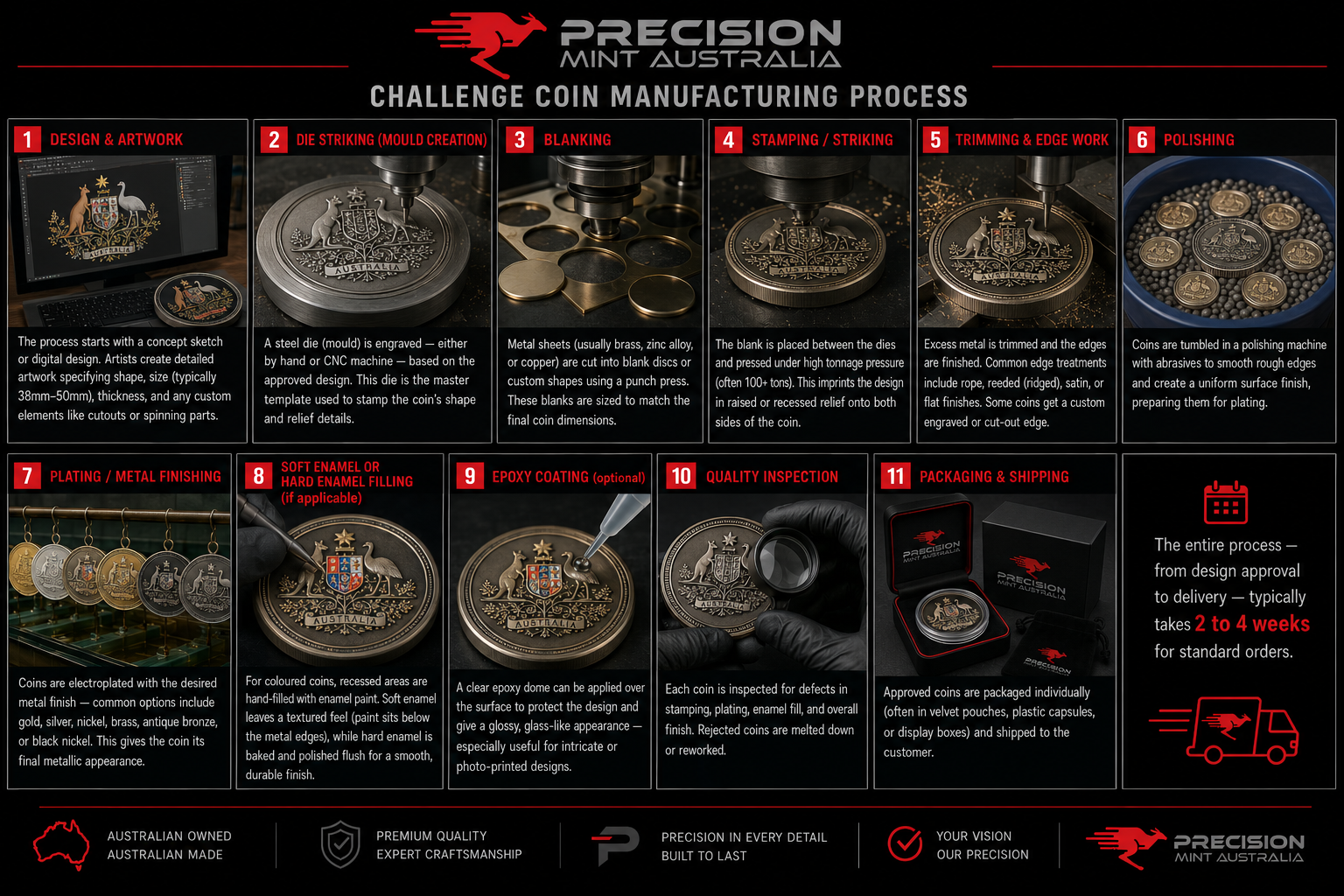

- DESIGN & ARTWORK
The process starts with a concept sketch or digital design. Artists create detailed artwork specifying shape, size typically 38–50 mm), thickness, and any custom elements like cutouts or spinning parts. - DIE STRIKING (MOULD CREATION)
A steel die (mould) is engraved — either by hand or CNC machine — based on the approved design. This die is the master template used to stamp the coin’s shape and relief details. - BLANKING
Metal sheets (usually brass, zinc alloy, or copper) are cut into blank discs or custom shapes using a punch press. These blanks are sized to match the final coin dimensions. - STAMPING / STRIKING
The blank is placed between the dies and pressed under high tonnage pressure (often 100+ tons). This imprints the design in raised or recessed relief onto both sides of the coin. - TRIMMING & EDGE WORK
Excess metal is trimmed and the edges are finished. Common edge treatments include rope, reeded (ridged), satin, or flat finishes. Some coins get a custom engraved or cut-out edge. - POLISHING
Coins are tumbled in a polishing machine with abrasives to smooth rough edges and create a uniform surface finish, preparing them for plating. - PLATING / METAL FINISHING
Coins are electroplated with the desired metal finish — common options include gold, silver, nickel, brass, antique bronze, or black nickel. This gives the coin its final metallic appearance. - SOFT ENAMEL OR HARD ENAMEL FILLING (if applicable)
For coloured coins, recessed areas are hand-filled with enamel paint. Soft enamel leaves a textured feel (paint sits below the metal edges), while hard enamel is baked and polished flush for a smooth, durable finish. - EPOXY COATING (optional)
A clear epoxy dome can be applied over the surface to protect the design and give a glossy, glass-like appearance — especially useful for intricate or photo-printed designs. - QUALITY INSPECTION
Each coin is inspected for defects in stamping, plating, enamel fill, and overall finish. Rejected coins are melted down or reworked. - PACKAGING & SHIPPING
Approved coins are packaged individually (often in velvet pouches, plastic capsules, or display boxes) and shipped to the customer.
The entire process — from design approval to delivery — typically takes 2 to 4 weeks for standard orders, notwithstanding peak commemorative, posting or deployment periods..
Subscribe
Login
0 Comments
Oldest